
Energy Heating Savings: Are TRVs still the best option out there?
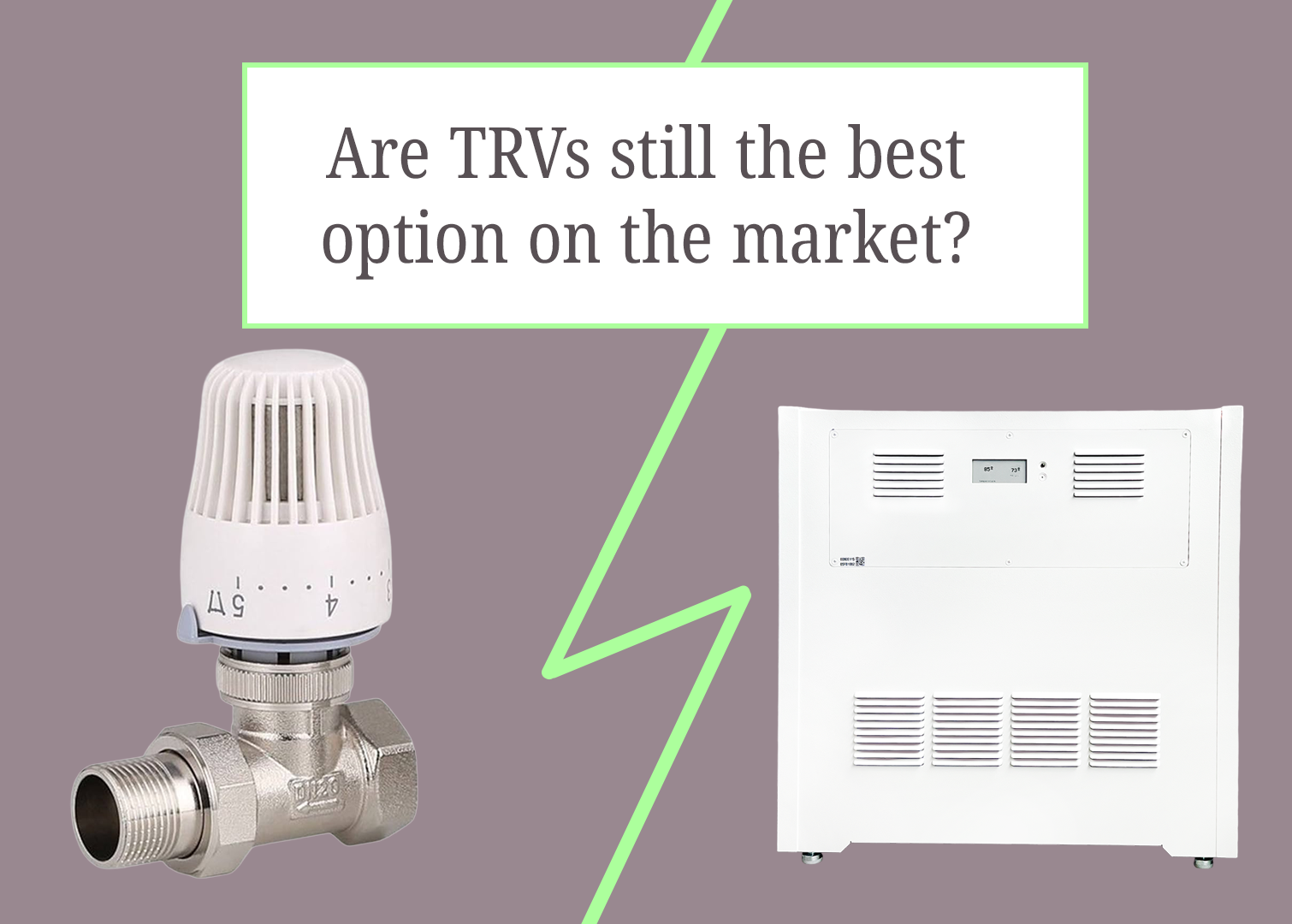
Investing in building heating efficiency measures is a big financial decision, and for years, TRVs have been the recommended choice for balancing hydronic and steam heated buildings because of its accessibility and affordability. The question is, are TRVs still the best choice on the market?
Let’s break it down.
TRV Benefits:
Room-to-room heating control
TRVs are attached to individual radiators, so residents are able to adjust heat output at a room by room basis. For example, at night, a resident might choose to limit the heat output from all rooms other than the bedroom so that heat doesn’t go wasted in un-occupied rooms.
Energy savings
Because residents might choose to reduce heat output from their radiators, this will redirect the steam to other areas of the building that require more heating. This makes for a leaner heating operation, allowing building owners and shareholders to save on heating costs.
Easy to use and inconspicuous
TRVs are small devices that attach discreetly to radiators. While many home appliances can take up whatever scarce space is left or leave residents struggling to figure out where to hide them, TRVs hardly stand out to the untrained eye.
TRV Drawbacks:
Unquantifiable Energy Savings
Building-wide energy savings can only happen when the energy savings measure is adopted building wide. When residents forget to use their TRVs and open windows instead, savings can be negligible. On top of that, even if residents were to use TRVs consistently and correctly, it becomes difficult for owners to understand their energy savings from a data perspective because of the lack of insight the hardware offers.
Frequent Maintenance
With convenience comes its share of issues. When TRVs fail during heating season, they can only be serviced by turning off the entire building’s heating. This means that most TRV maintenance calls happen after heating season ends, and that building supers take on the burden of keeping track of which ones break across several months. This can lead to missed seasonal maintenance, and doesn’t even address the potential that TRVs can fail shut during the rest of the year and go unnoticed until heating season is in full swing again.
No longer receiving incentives
One of the biggest factors that popularized TRVs was that they qualified for utility incentives, making heating control an affordable upgrade. Unfortunately, as of 2026, Con Edison and National Grid have both dropped TRVs from their list of qualifying energy efficiency upgrades.
In short, TRVs can be a reliable energy savings option when implemented building-wide and followed up with annual maintenance.
Enter: the Thermostatic Radiator Enclosure (TRE)
If you’re a building owner or shareholder looking for an alternative that offers similar benefits as the TRV, but without the drawbacks, there are other options on the market. Your building might be a good fit for a TRE, or a thermostatic radiator enclosure.
Quantifiable Savings + 24/7 Building Data + Alerts
TREs like the Cozy Custom, offer measurable, quantifiable, trackable heating data on your building. With temperature sensors built into the radiator cover, building owners and shareholders can analyze heating data to figure out how best to optimize heating systems. Additionally, Kelvin sends notifications if there are abnormal readings or if the boiler goes down.
Long Lifespan + Quick Maintenance Dispatch
Because Cozys are made of metal, they have a lifespan of 15 years and are easy to clean and maintain. If there is ever an issue with the software or hardware, Kelvin can either troubleshoot from the backend or dispatch field techs to address the issue at no additional cost.
Qualifies for incentives
TREs are now one of the only home energy efficiency upgrades that still qualify for utility incentives. This can knock off hundreds of dollars per Cozy Custom, and to cut out any middle men or paperwork, Kelvin applies and procures incentive money on behalf of customers. That means that once building owners or shareholders purchase Cozy Customs, Kelvin handles the rest.
Non-disruptive installation process
While most retrofit solutions that provide the level of savings and detailed insight as Cozy Customs require some sort of plumbing or electrical work, Cozys don’t require any type of disruptive work. We just place the insulated radiator cover on top of the radiator and plug it in. Additionally, all Kelvin products are compatible with boiler timers such as Runwise and Entech!
Conclusion
While TRVs are useful tools and have their place, they are no longer the most effective and efficient option for room level temperature control, let alone for building wide heat balancing. For owners and shareholders, a smart TRE, like the Cozy Custom, might be the smarter option for your building.
If you want to see if your building is a good candidate, reach out to our sales team at: [email protected]
